What Creative Music Is
Creative music is a form of artistic expression based on sound exploration, improvisation, and experimentation with different musical structures. Unlike more traditional styles, this approach allows musicians to break away from established rules and discover new ways of communicating through sound.
This type of music can combine genres, instrumental techniques, and technological tools to create original compositions. Creative music is not limited to a specific style: it can appear in jazz, experimental music, electronic music, or even contemporary classical music.
Many people begin developing their creativity through music classes, where they learn the fundamental skills needed to explore different forms of composition and improvisation.
Characteristics of Creative Music
Creative music is characterized by its freedom and experimental approach. Instead of following rigid structures, musicians explore new combinations of rhythm, harmony, timbre, and texture.
Improvisation
Improvisation is one of the fundamental pillars of creative music. It allows performers to react in real time to the sounds they produce themselves or those created by other musicians. This process generates unique and unrepeatable performances.
Sound Exploration
Artists working with creative music often experiment with unusual sounds. This may include the use of synthesizers, electronic effects, prepared instruments, or field recordings.
Genre Fusion
The blending of musical styles is very common in creative music. A composer may combine elements of jazz, electronic music, classical music, or ambient music to develop an innovative sonic proposal.
Tools for Creating Creative Music
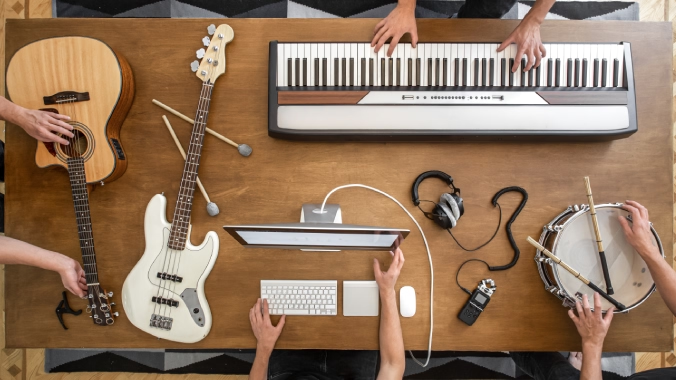
Today there are many tools that make it easier to develop original compositions. Both traditional instruments and digital technologies allow musicians to explore new musical possibilities.
Traditional Instruments
Many musicians begin their creative process using classic instruments such as the piano, guitar, or violin. Learning to play an instrument helps develop a deeper understanding of musical structure and makes it easier to experiment with melodies and harmonies.
If you want to deepen your instrumental skills, you can explore different instrument classes such as piano lessons, guitar lessons or violin lessons.
Digital Music Production
Digital audio workstations allow musicians to record, edit, and manipulate sounds with great precision. Thanks to these tools, it is possible to create complex compositions using multiple layers of sound, effects, and virtual synthesizers.
Field Recordings
Field recordings involve capturing sounds from the environment, such as nature or urban atmospheres. These sounds can be integrated into musical compositions to create more organic and narrative soundscapes.
Composition Techniques in Creative Music
Composers working in creative music use different techniques to build original and expressive pieces.
Layered Composition
A common technique involves building a musical piece gradually. First a rhythmic base is added, then harmonic elements, followed by melodies, and finally textures or atmospheric effects.
Use of Silence
Silence can also be a powerful tool in creative music. Introducing strategic pauses can create tension, contrast, and greater expressiveness within a composition.
Polyrhythm
Polyrhythm involves combining different rhythmic patterns at the same time, creating complex and dynamic musical structures.
Examples of Creative Music
Creative music can be found in many contemporary styles. In modern jazz, for example, improvisation and harmonic exploration are fundamental elements. In experimental electronic music, artists use synthesizers and digital processing to design completely new sounds.
Creative music is also often present in audiovisual projects, artistic installations, or soundtracks that aim to create original and emotional atmospheres.
Tips for Developing Your Musical Creativity
Developing musical creativity is an ongoing process that requires curiosity, practice, and openness to new ideas.
Listen to Different Musical Styles
Exploring a wide variety of musical genres can broaden your perspective and offer new ideas for your compositions. Reading articles about musical instruments can also help you discover new sonic possibilities.
Experiment Without Fear
Not every idea will work, but every attempt is part of the creative process. Trying unusual combinations of sounds or rhythms can lead to interesting discoveries.
Collaborate with Other Musicians
Working with other artists can enrich your creative process. For example, developing your voice through singing classes or learning new vocal techniques can open new forms of musical expression.
Learning Creative Music at Different Ages
Musical creativity can be developed at any stage of life. There are programs designed for different age groups that allow people to explore music progressively.
Younger children can get started through creative music classes for kids, where play, rhythm, and improvisation are essential elements of the learning process.
Teenagers can explore composition and experimentation more deeply through creative music classes for teenagers, while adults who want to develop their creativity can do so through creative music classes for adults.
If you want to learn more about this approach, you can also visit creative music classes, where improvisation, composition, and sound exploration techniques are developed.
The Relationship Between Music and Other Arts
Artistic creativity is not limited to music alone. Other disciplines such as dance also explore the relationship between rhythm, movement, and emotion. In many stage performances, music and movement are combined to create complete artistic experiences.
For example, in educational projects focused on dance in Madrid, body expression and musicality are developed together, demonstrating how rhythm and creativity can grow through different artistic disciplines.
The Importance of Emotion in Creative Music
Beyond technique, creative music aims to convey emotions. A composition can evoke memories, landscapes, or deep emotional states in the listener.
For this reason, many composers prioritize expressiveness and artistic intention over formal rules. Musical creativity emerges when the artist allows themselves to freely explore their own sonic language.
Conclusion
Creative music is an open field where imagination and experimentation play a fundamental role. By combining instruments, technology, and different composition techniques, musicians can develop unique works that reflect their artistic identity.
Exploring new sounds, improvising, and learning from other musicians are some of the best ways to enhance musical creativity and build a personal style within the vast universe of music.
Frequently Asked Questions About Creative Music
What is creative music and how does it differ from other musical styles?
Creative music is a style based on experimentation, improvisation, and genre blending. Unlike traditional styles, it allows breaking established rules and exploring new forms of sonic expression.
What are the main characteristics of creative music?
It is characterized by artistic freedom, sound exploration, genre fusion, and improvisation. Musicians can experiment with unconventional rhythms, harmonies, timbres, and textures.
Why is improvisation so important in creative music?
Improvisation allows performers to react in real time to sounds and create unique interpretations. It is a fundamental pillar that encourages originality and personal expression in every performance.
What instruments can be used to create creative music?
Both traditional instruments such as piano, guitar, or violin, and digital technologies, synthesizers, and field recordings can be used to explore new sounds and develop original compositions.
How does digital music production help develop creative music?
Digital audio workstations allow precise recording, editing, and manipulation of sounds. This makes it easier to create complex compositions, experiment with effects and virtual synthesizers, and combine multiple layers of sound.
What composition techniques are used in creative music?
Techniques such as layered composition, strategic use of silence, and polyrhythms are used. These allow building original pieces, generating tension, and creating complex musical structures.
What is polyrhythm and how is it applied in creative music?
Polyrhythm consists of combining different rhythmic patterns simultaneously. This technique generates dynamic and complex structures that enrich musicality and provide rhythmic diversity in compositions.
Where can examples of creative music be found today?
It can be found in modern jazz, experimental electronic music, soundtracks, art installations, and audiovisual projects that seek original and expressive atmospheres.
How can you develop musical creativity if you are starting out?
It is recommended to explore different musical styles, experiment without fear, and collaborate with other musicians. Taking music classes and learning improvisation techniques also helps boost creativity.
Can creative music be learned at any age?
Yes, there are programs adapted to all ages. Kids can start with creative music classes for children, teens can deepen their skills in composition and experimentation, and adults can explore musical creativity through specialized classes.