Music is a universal language that transcends cultures, eras, and borders. Furthermore, understanding what music is goes beyond just listening to melodies; it involves grasping how sounds are organized to convey emotions, tell stories, and connect people on a deeper level.
This article explores what music is, its main elements, the history of its evolution, its benefits for personal and educational development, and how to learn to perform it through music lessons, creative classes, and instrument study. Therefore, it provides a useful guide for both beginners and more advanced musicians.
Definition of What Music Is
Music can be defined as the art of combining sounds and silences harmoniously, following patterns of rhythm, melody, and harmony. It is not just entertainment; in this way, it becomes a form of expression that communicates feelings, ideas, and culture.
- Rhythm: organizes sounds in time and allows musical pieces to be structured coherently.
- Melody: a succession of notes that form a recognizable musical line, facilitating memorization and performance.
- Harmony: the simultaneous combination of notes that creates chords and musical textures, enriching the listening experience.
- Timbre: a characteristic that distinguishes the sound of an instrument or voice, allowing the identification of different sounds and styles.
History and Evolution of Music
Music has accompanied humans since prehistory. The first musical sounds were produced with the voice or primitive instruments. Over time, the following emerged:
- Classical and Baroque music in Europe.
- Musical traditions from Asia, Africa, and the Americas.
- Modern genres such as jazz, rock, pop, and electronic music.
Additionally, knowing the history of music helps understand how styles, techniques, and instruments we use today in our instrument classes developed, providing context for learning.
Essential Elements to Understand What Music Is
- Musical notation: a system to represent sounds on paper or digitally, facilitating study and performance.
- Improvisation: the ability to create music spontaneously, fostering creativity and autonomy.
- Composition: the process of creating original musical works, enhancing artistic expression.
- Performance: the skill to execute music with accuracy and expression, reinforcing technique and emotional communication.
Benefits of Music in Education and Personal Development
Studying what music is and learning to play an instrument or sing brings proven benefits. Moreover, combining these practices with other artistic activities enhances cognitive and emotional skills:
- Stimulates the brain, improving memory and concentration.
- Fosters creativity and personal expression, allowing the communication of ideas and emotions.
- Develops social skills through group or choir participation, strengthening cooperation and teamwork.
- Improves coordination and fine motor skills.
- Reduces stress and promotes emotional well-being, contributing to overall health.
That’s why our music classes and creative music classes are designed for children, teenagers, and adults, adapting exercises to each age and level to ensure progressive and motivating learning.
How to Learn Music Effectively
To understand what music is and develop musically:
- Study music theory and sheet music reading, enabling interpretation of any musical style.
- Practice an instrument or singing regularly, reinforcing technique and aural memory.
- Participate in ensembles, choirs, or musical groups to apply what you’ve learned and collaborate with other musicians.
- Combine technique classes with creative performance to develop versatility.
- Listen to different genres to broaden musical understanding and enrich your repertoire.
Musical Instruments and Resources
Exploring instruments is key to understanding what music is. Some examples include:
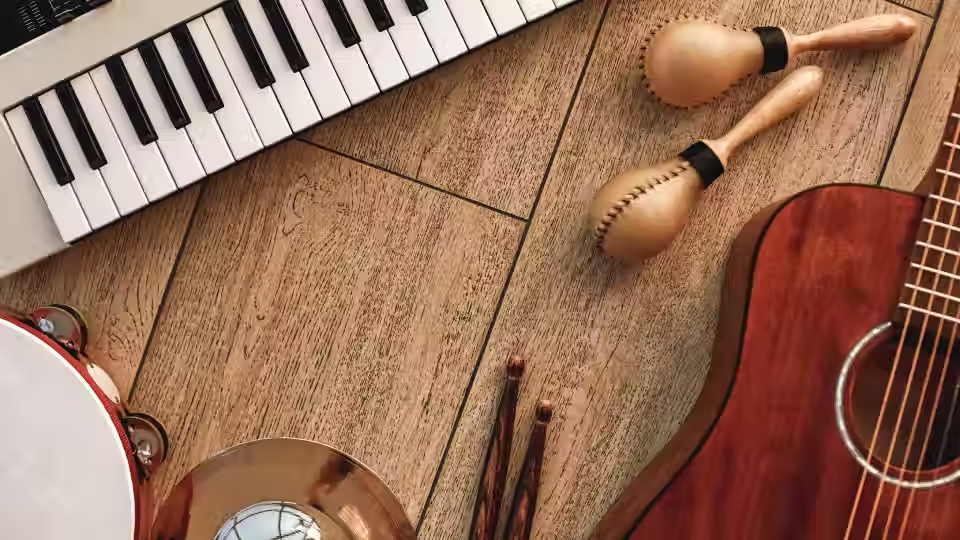
- Piano: excellent for theory and harmony, and helps understand musical structures.
- Guitar: popular for accompaniment and composition, allowing experimentation with various styles.
- Violin: develops musical ear and technique, promoting precision and control.
- Voice: a natural instrument for expression and singing, combining technique and creativity.
Our piano classes, guitar classes, and violin classes combine practice, technique, and creativity, deepening musical understanding and artistic development.
Music as an Artistic Expression
Understanding what music is also means recognizing its role in emotional and cultural communication. Singing or playing an instrument not only develops technical skills but also allows you to:
- Express complex emotions and personal feelings artistically.
- Connect with others through collective performance, strengthening bonds.
- Create original works through composition and improvisation, boosting creativity.
- Complement other artistic disciplines, such as musical theatre in Madrid, for a comprehensive learning experience.
Conclusion
Understanding what music is means appreciating its importance in education, personal development, and artistic expression. Learning theory, performing instruments, and exploring musical creativity allows you to fully benefit from this universal discipline.
Start Exploring Music
Visit our music classes and creative music classes for children, teenagers, and adults, and discover how to play instruments, sing, and express yourself through musical art, ensuring motivating and progressive learning.
Frequently Asked Questions About What Music Is
What is music?
Music is the art of combining sounds and silences harmoniously through rhythm, melody, harmony, and timbre. It is a form of expression that communicates emotions, ideas, and culture.
What are the essential elements of music?
The essential elements include rhythm (organization of sounds over time), melody (succession of notes), harmony (combination of notes), and timbre (the characteristic that distinguishes a voice or instrument).
How has music evolved throughout history?
From prehistoric vocal sounds and primitive instruments, music evolved into classical and Baroque traditions in Europe, the musical traditions of Asia, Africa, and the Americas, and modern genres such as jazz, rock, pop, and electronic music.
What benefits does music offer for education and personal development?
It stimulates the brain, improves memory and concentration, fosters creativity and personal expression, develops social skills, coordination, and fine motor skills, and reduces stress, promoting emotional well-being.
How can music be learned effectively?
Study music theory and sheet music reading, practice an instrument or singing regularly, participate in ensembles or choirs, combine technical exercises with creative interpretation, and listen to different genres to broaden musical understanding.
Which instruments are recommended for learning music?
Piano (for theory and harmony), guitar (for accompaniment and composition), violin (for ear training and technique), and voice (for expression and singing). Classes combine practice, technique, and creativity.
What is musical notation and what is it for?
Musical notation is the system for representing sounds on paper or digitally. It allows music to be interpreted and communicated accurately and reproducibly.
How can music be used as artistic expression?
It allows expressing complex emotions, connecting with others, creating original works through composition and improvisation, and complementing other artistic disciplines, such as musical theater.
Why is improvisation important in music?
Improvisation enables spontaneous music creation, develops creativity, adapts to different styles, and enriches both personal and collective performance.
Where can I start learning music in Madrid?
Visit our music classes and creative music classes for kids, teens, and adults, and learn to play instruments, sing, and express yourself musically.